

Row and dialog layout
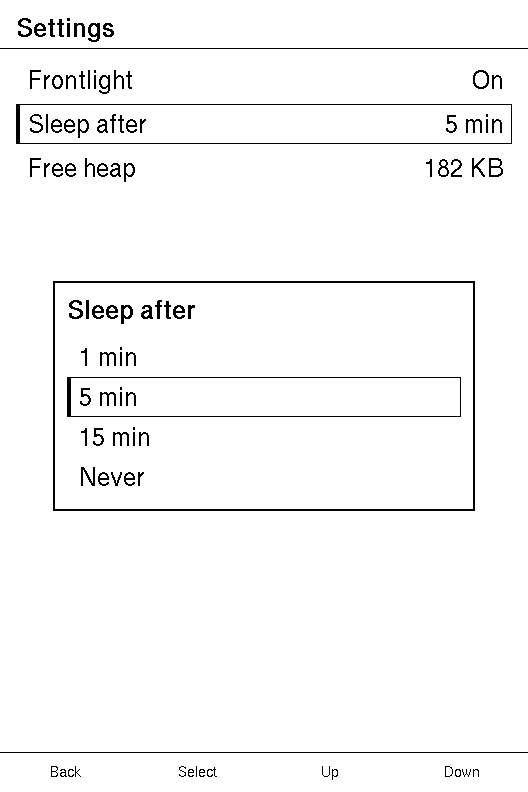
Where a list's rows and a dialog's rows land, answered without painting
anything. draw_list and
draw_option_popup paint from these same
answers, so a caller that measures a list, or hit-tests a dialog, agrees with
what was painted to the pixel.
| What a caller asks | What answers it |
|---|---|
| how tall each row of a list is | row_height |
| how many rows of a list are painted | rows_that_fit |
| where a dialog and its rows land | popup_layout, answering a PopupLayout |
| which dialog row a tap is on | option_popup_row_rect |
The two list functions need no host. The dialog functions read the panel's size
and measure the title through the installed host, so their examples install
xpui's recording fake, a 480x800 panel.
Painting lists is what draws from these answers.
Plain chrome wires option_popup_row_rect into a backend's
Chrome implementation.
Topics
Section titled “Topics”row_height | The height every row in this list gets. |
rows_that_fit | How many of rows will actually be painted into rect. |
popup_layout | Where a dialog titled title with count options lands on the panel. |
PopupLayout | Where a dialog and its rows land. |
option_popup_row_rect | Screen rect of one dialog row, for hit-testing. |
row_height
Section titled “row_height”The height every row in this list gets.
pub fn row_height<'a>( metrics: &Metrics, rows: usize, row: &dyn Fn(usize, RowField) -> Option<&'a str>,) -> i32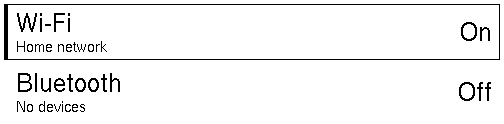
list_row_height_with_subtitle when any of the rows answers
RowField::Subtitle, and list_row_height otherwise. Uniform across the list,
and the same rule xpui's List measures with, so the two agree about how tall
a list is. It asks row only for subtitles, and needs no host.
Example — one subtitle makes every row taller
use xpui::host::RowField;use xpui_chrome::{Metrics, row_height};
let plain = |_: usize, field: RowField| match field {  RowField::Title => Some("Wi-Fi"),  _ => None,};let second_has_one = |index: usize, field: RowField| match field {  RowField::Title => Some("Wi-Fi"),  RowField::Subtitle if index == 1 => Some("Home network"),  _ => None,};
assert_eq!(row_height(&Metrics::DEFAULT, 3, &plain), 40);assert_eq!(row_height(&Metrics::DEFAULT, 3, &second_has_one), 56);
See also: draw_list, rows_that_fit
rows_that_fit
Section titled “rows_that_fit”How many of rows will actually be painted into rect.
pub fn rows_that_fit<'a>( metrics: &Metrics, rect: Rect, rows: usize, row: &dyn Fn(usize, RowField) -> Option<&'a str>,) -> usize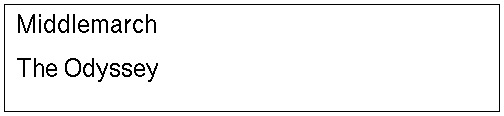
draw_list stops before a row that does not fit, so the space it
leaves can be up to one row's stride. A caller that needs to know where the list
really ends has to ask rather than divide. It takes the same arguments as
draw_list, less selected, and draws nothing.
Example — where the list ends
use xpui::host::RowField;use xpui::Rect;use xpui_chrome::{Metrics, row_height, rows_that_fit};
let row = |_: usize, field: RowField| match field {  RowField::Title => Some("A book"),  _ => None,};let metrics = Metrics::DEFAULT;let rect = Rect::new(0, 60, 400, 100);
let drawn = rows_that_fit(&metrics, rect, 5, &row);let height = row_height(&metrics, 5, &row);let bottom = rect.y() + drawn as i32 * (height + metrics.list_row_gap) - metrics.list_row_gap;
assert_eq!(drawn, 2);assert_eq!(bottom, 144, "16 pixels short of the rect's own bottom, 160");
See also: draw_list, Metrics::list_rows_for
popup_layout
Section titled “popup_layout”Where a dialog titled title with count options lands on the panel.
pub fn popup_layout(metrics: &Metrics, title: &str, count: usize) -> PopupLayout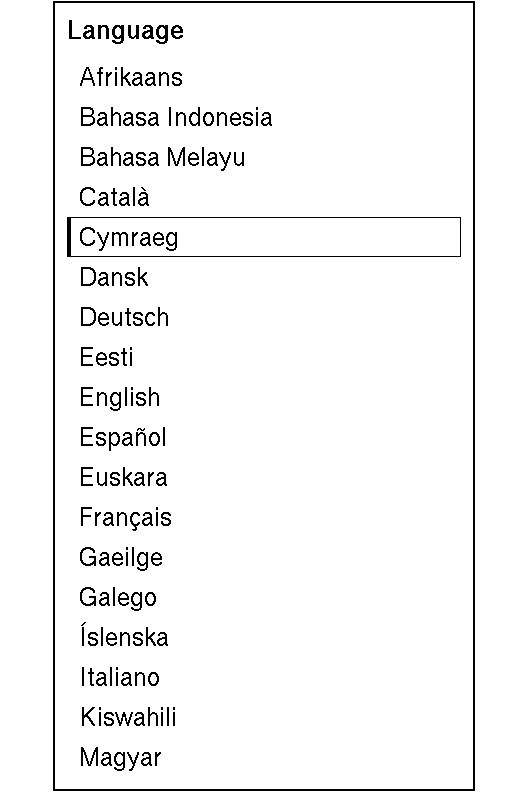
The dialog is dialog_width_percent of the panel's width, centred. Its height is
two borders, two paddings, a title band of the bold face's line height plus
dialog_padding (none for an empty title), and list_row_height for each
visible row. It reads the panel's size from the installed host, and measures the
title's line through it.
The height is capped by the panel: never taller than it, and never fewer than one row, since a dialog showing nothing is no improvement on one showing too much. A twenty-entry language picker reaches the cap on a 480x800 panel.
Example — a three-option dialog on 480x800
use xpui::Rect;use xpui_chrome::{Metrics, popup_layout};
let layout = popup_layout(&Metrics::DEFAULT, "Typeface", 3);
assert_eq!(layout.frame, Rect::new(48, 311, 384, 177));assert_eq!(layout.first_row, Rect::new(62, 354, 356, 40));assert_eq!((layout.stride, layout.visible), (40, 3));
Example — more options than the panel holds
use xpui_chrome::{Metrics, popup_layout};
let layout = popup_layout(&Metrics::DEFAULT, "Language", 30);assert_eq!(layout.visible, 18);assert!(layout.frame.height() <= 800);
See also: PopupLayout, draw_option_popup, option_popup_row_rect
PopupLayout
Section titled “PopupLayout”Where a dialog and its rows land.
pub struct PopupLayout
What popup_layout answers. Both
draw_option_popup and
option_popup_row_rect go through it, so the rows are
painted where they answer taps. It is Copy and Eq.
| Field | Type | |
|---|---|---|
PopupLayout::frame | The dialog's outer rectangle, border included. | Rect |
PopupLayout::first_row | The first option's row; the rest follow at stride. | Rect |
PopupLayout::stride | From one row's top to the next. | i32 |
PopupLayout::visible | How many rows actually fit on the panel. | usize |
Row n is first_row moved down by stride * n, for each n below visible.
A dialog with more options than the panel is tall is drawn as tall as it fits
and no taller, rather than running its frame off the bottom edge.
Example — row by row
use xpui::Rect;use xpui_chrome::{Metrics, option_popup_row_rect, popup_layout};
let layout = popup_layout(&Metrics::DEFAULT, "Typeface", 3);let options = |_: usize| Some("A face");for index in 0..layout.visible {  let row = layout.first_row;  let expected = Rect::new(row.x(), row.y() + layout.stride * index as i32, row.width(), row.height());  assert_eq!(option_popup_row_rect(&Metrics::DEFAULT, "Typeface", &options, 3, index), Some(expected));}
See also: popup_layout
option_popup_row_rect
Section titled “option_popup_row_rect”Screen rect of one dialog row, for hit-testing.
pub fn option_popup_row_rect<'a>( metrics: &Metrics, title: &str, _options: &dyn Fn(usize) -> Option<&'a str>, count: usize, index: usize,) -> Option<Rect>
| Parameter | Meaning |
|---|---|
metrics, title, count | The same as the draw_option_popup call being hit-tested. |
_options | Not read. It is there because Chrome::option_popup_row_rect passes it. |
index | The option, zero-based. |
None when index is past the last option, or past the last row that fits on
the panel, which is not painted and so not touchable.
One layout function serves the dialog's painter and its hit-test. The rect
comes from popup_layout, which draw_option_popup reads as
well. Deriving that geometry twice is how a dialog ends up painting row 3 where
row 2 responds to a touch, and nothing about that failure looks wrong until
somebody taps it. The rect is exactly the one a selected row is outlined in.
Example — which option a tap chose
use xpui::Point;use xpui_chrome::{Metrics, option_popup_row_rect};
const FACES: [&str; 3] = ["Serif", "Sans", "Mono"];let options = |index: usize| FACES.get(index).copied();
let tap = Point::new(100, 410);let chosen = (0..FACES.len()).find(|&index| {  option_popup_row_rect(&Metrics::DEFAULT, "Typeface", &options, FACES.len(), index)    .is_some_and(|row| row.contains(tap))});assert_eq!(chosen, Some(1));assert_eq!(option_popup_row_rect(&Metrics::DEFAULT, "Typeface", &options, FACES.len(), 3), None);
See also: draw_option_popup, popup_layout